


Shamrock Island Bird Rookery
A crucial nesting site for bird colonies and a window seat for coastal conservation
When Charles Darwin called the islands of the Galapagos "a little world within itself," he could have been writing about Shamrock Island instead. Once part of Mustang Island, Shamrock split off more than 60 years ago after bay channelization and a major hurricane stole some of its sand. The nascent island lacks year-round predators, while boasting shallow seagrass meadows full of fish and invertebrates that draw in dolphins and more, marshlands that inundate in high tides, and shrub-filled uplands that mirror those found on Mustang.
"You have the whole gamut [on Shamrock], said Sonia Nájera, The Nature Conservancy in Texas' director of landscape initiatives, from below-sea level landscapes to ones at least a foot above sea level. And with that, you get lots of different [shelters and resources for birds and other wildlife that make the place come alive]."
From February into late fall, the air at Shamrock rings with calls of breeding sooty terns, pelicans, white-faced ibises and more. The popular stopover for colonizing birds in the bay's southern edge provides species like threatened reddish egrets with safe—and much-needed—coastal nesting spots.
Shamrock's 100 acres also offer prime opportunities nearby for migratory birds to gain nutrients to raise young there. Caspian and royal terns that nest in the grasses can forage knee-deep in seagrass for sea trout, mullet, and flounder, without leaving their chicks alone for long periods. Meanwhile, divers such as pelicans can ply the deeper waters of the Bay. Other foraging spots are just a mile away in the saltwater lagoons of TNC's Francine Cohn Preserve, or in Charlie's Pasture and lagoons along Mustang's northern expanse.
Quote: Sonia Nájera
"Shamrock is important in and of itself, but it's also part of this archipelago of islands that many species rely on."
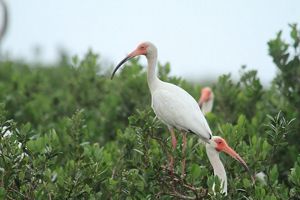

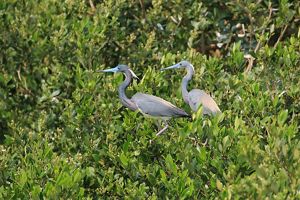
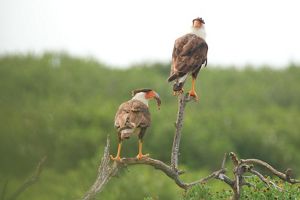
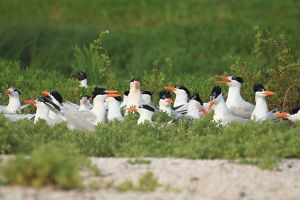
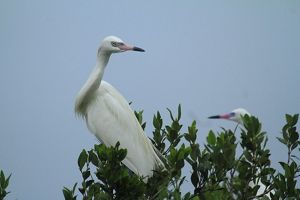
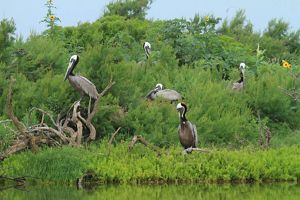
BIRD BIODIVERSITY: Many species, like white Ibis, nest at Shamrock Island. © Rich Kostecke
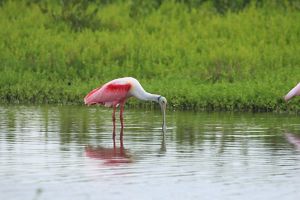
JUST ROSIE: A roseate spoonbill forages through shallow waters. © Rich Kostecke
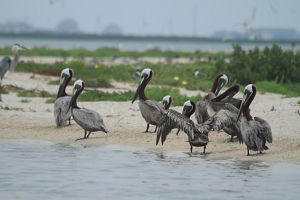
SPECIES AT RISK: Brown pelicans are federally listed as endangered. © Rich Kostecke
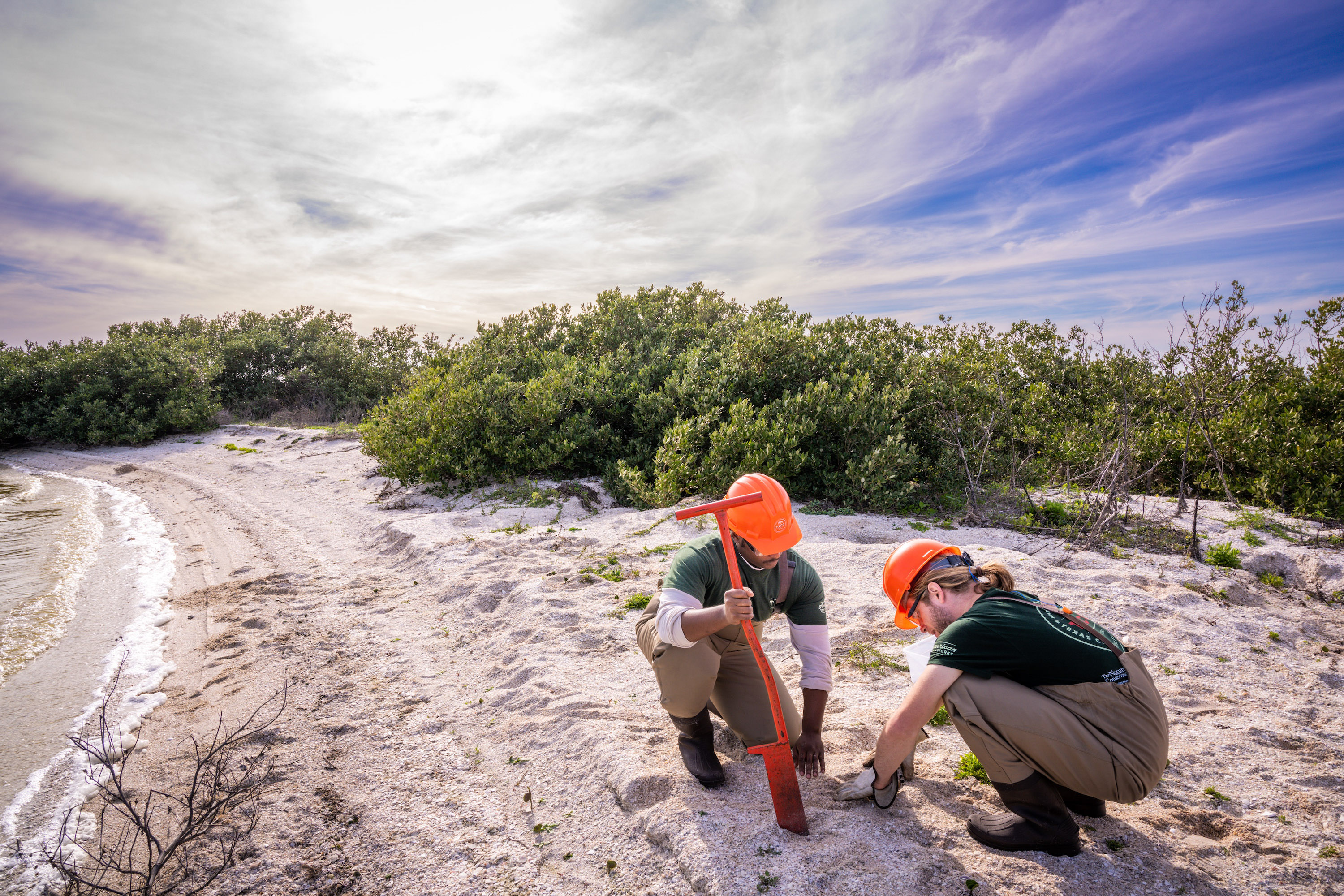
MAKING A DIFFERENCE: Volunteers plant native seedlings to enhance habitat.
KEY ROOKERY: Shamrock Island is a critical nesting ground for birds. © Rich Kostecke
DISTINCTIVE COLORING: Tricolored herons, like these, have blue-gray feathers. © Rich Kostecke
ON THE HUNT: Crested caracaras feed on a variety of small animals. © Rich Kostecke
COLONIAL NESTING: Royal terns nest on the ground in the open. © Rich Kostecke
NOT SO RED: Reddish egrets can be dark gray or white in color. © Rich Kostecke
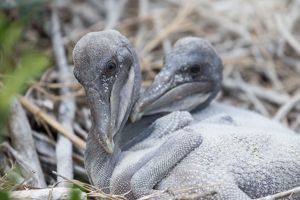
NESTING HABITAT: Brown pelicans often nest on low trees and mangroves. © Rich Kostecke
Protecting Shifting Shorelines
Shamrock Island's upland stretches, dotted with shrubs such as honey mesquite, and prickly pear and Spanish dagger, form about two thirds of the landscape. The shrubs provide above-ground nesting sites for wading birds like roseate spoonbills and reddish egrets, and thousands of brown pelicans. These pelicans, which warm their eggs using the heat off their feet, just came off the endangered species list a few years ago thanks to rookeries like Shamrock.
Gulls and some smaller waders choose to nest instead on the sandy flats that surround the island's shrubbier terrain. Among these month's-long residents are royal terns, and sooty terns and black skimmers, both of which have become relatively rare.
"Black skimmers are declining rapidly," Nájera said, adding that coastal construction and other factors have limited nesting sites for many coastal bird species statewide."
To help retain quality sites at Shamrock, TNC and other organizations have ringed it with reinforced rock walls. These 27 breakwaters buffer the impact of wind-driven waves that stream across Corpus Christi Bay onto Shamrock. Shoreline erosion plummets behind the walls, allowing added seagrass to thrive. Even with such measures, though, up to 14 inches of shoreline can be lost along the island's edges annually.
Accessible Testing Grounds
Shamrock's proximity to Mustang Island – yet minimal disturbance —brings hope as well, as it serves as a testing site for island restoration measures. For instance, TNC is monitoring near-shore stabilization approaches here, which include evaluating whether sediment works best to stabilize shorelines, with or without adding artificial reef units. Much of this restoration research is led by the Harte Research Institute of Texas A&M; their project evaluates which Texas coastal islands should be prioritized to restore for species survival.
Other research focuses on tagging and tracking the behavior of crested caracara that nest at Shamrock. Being predators, these colorful, majestic birds might have reduced colony numbers on-site, though that remains unclear.
Quote: Sonia Nájera

We're working with partners to assess their impact on other populations, although their presence is a natural part of the region's ecology. It's all part of doing everything we can to keep Texas's natural spaces as healthy as possible.
We Can’t Save Nature Without You
Sign up to receive monthly conservation news and updates from Texas. Get a preview of Texas's Nature News email.

More from Texas
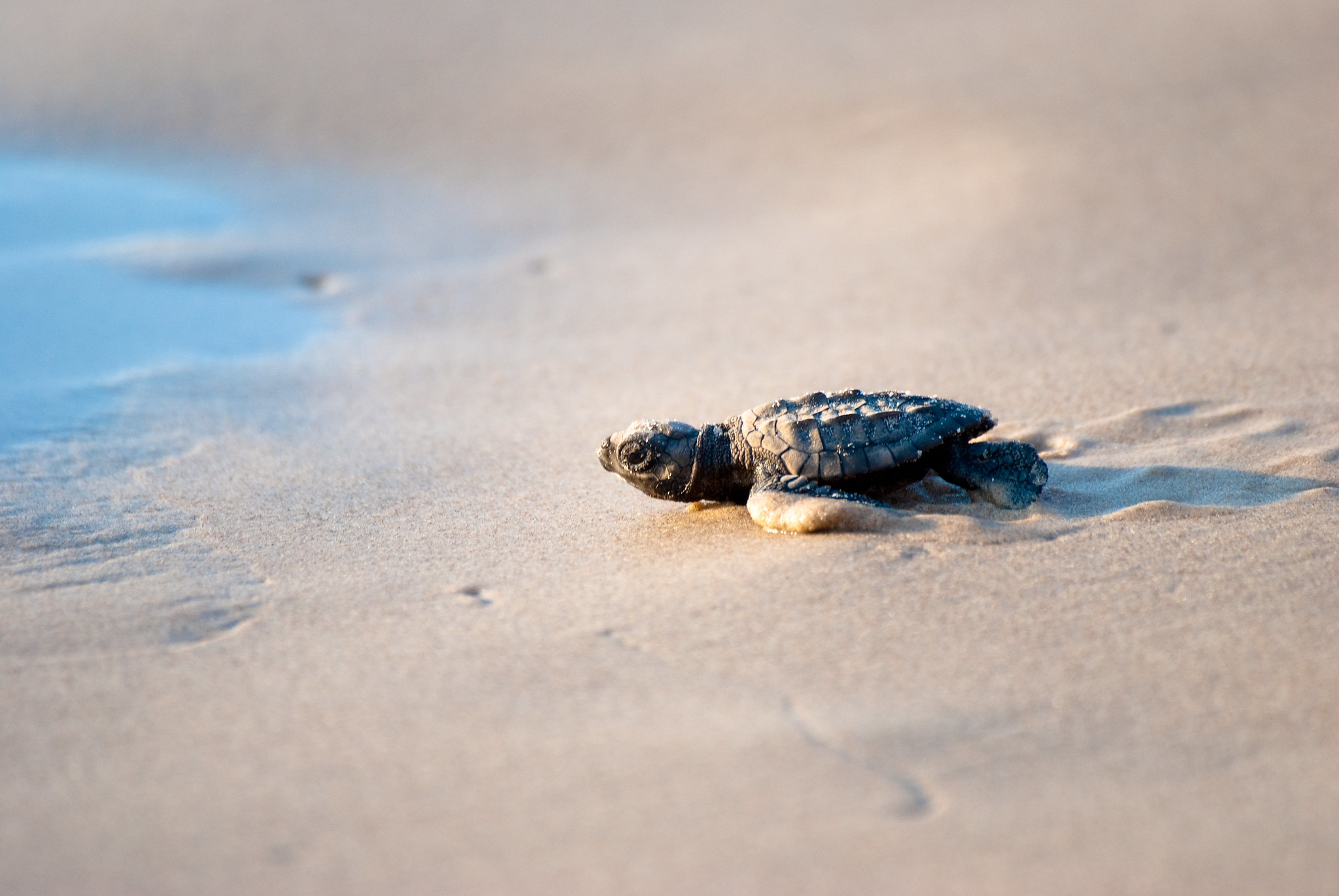
Safeguarding South Padre Island
Working with the USFW and other partners, The Nature Conservancy has acquired more than 6,200 acres along part of the last unprotected stretch of South Padre Island.

Can Blue Carbon Be a Climate Solution in Texas?
Why protecting and restoring wetlands can slow climate change and protect vulnerable coastlines.
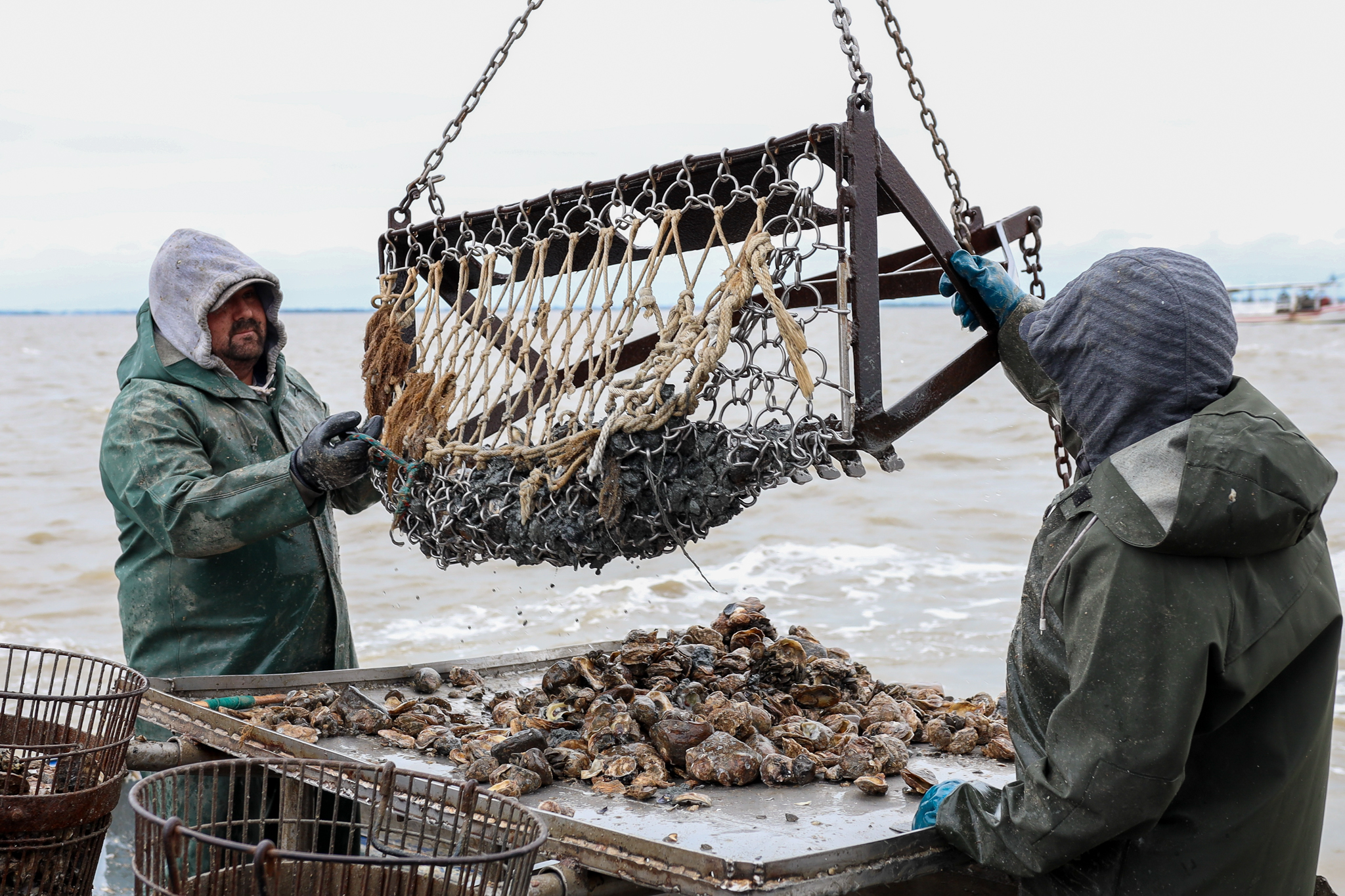
Turning the Tide for Texas Oysters
The Nature Conservancy is turning the tide for Texas oysters, using an innovative restoration approach to revitalize Gulf oyster populations for ecology and economy alike.