interstitialRedirectModalTitle

interstitialRedirectModalMessage

Places We Protect

Green's Bluff

Indiana

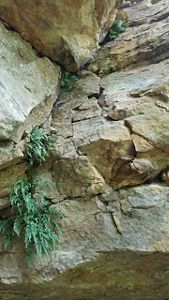
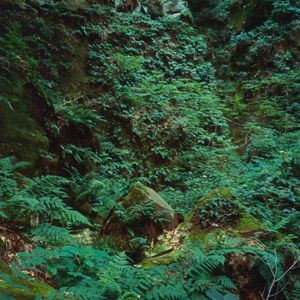
Ferns and evergreens in and alongside a steep sandstone cliff.
Green's Bluff Great any time of year! © Jesse Moore/TNC

Great improvements are happening at this great preserve.

Overview

Description

Why TNC Chose This Site

Green’s Bluff is a picturesque nature preserve located in Owen County, comprised of two separate properties, each with its own loop trail. Green's Bluff features an upland forest, rocky bluffs, and a lush floodplain forest along Raccoon Creek. The steep bluffs are home to a grove of eastern hemlock trees, a species that is only found in Indiana on steep, north-facing slopes that provide a shady, cool environment. The preserve also features cave entrances and remnants of an old grist mill. This preserve was established in 1985, and as of 2021, the preserve is 1,134 acres.
 
What's New at Green's Bluff

TNC has improved the existing trail at Green’s Bluff and added interpretive signage to enhance visitor enjoyment. In 2020 and 2021, TNC also created a second trail and ten acres of pollinator habitat at the newer acquisition.

The new trail and pollinator habitat were made possible by a grant from the Duke Energy Foundation. Duke has been a long-time supporter of TNC and conservation projects in Indiana.

Access

OPEN TO THE PUBLIC

Spencer, Indiana

Hours

Sunrise to Sunset

Highlights

Green’s Bluff features an upland forest, rocky bluffs and a lush floodplain forest along Raccoon Creek.

Size

1,134 acres

Explore our work in Indiana

Photos from Green's Bluff

Tag your preserve visits on Instagram with #GreensBluff to have your photos featured here!

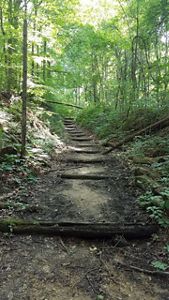
A trail runs through lush green foreset.
Ferns cling to a steep sandstone cliff.
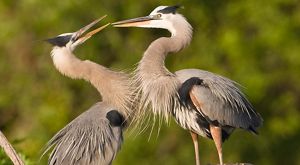
Two large black and white great blue herons face each other.
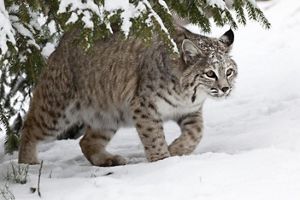
A big bobcat with black markings stalks through the snow.
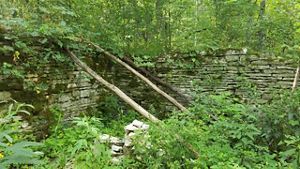
Stone wall is featured in a lush green forest.
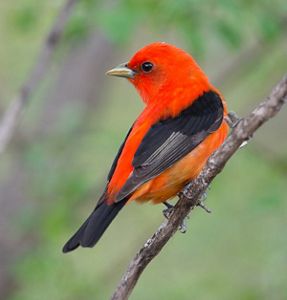
A bright red tanager with black wings perches on a branch.
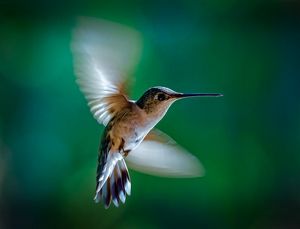
A small ruby-throated hummingbird is in flight.
A cerulean warbler with black and blue markings pecks at a berry on a branch.
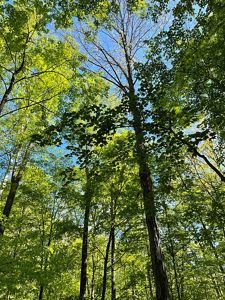
Forest treetops frame a blue sky.
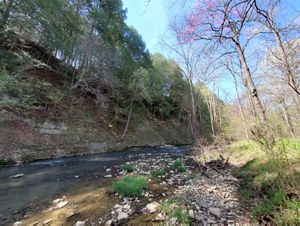
A creek runs by steep sandstone cliffs.

Visit

  • The dominant features of Green’s Bluff are the steep, rugged sandstone cliffs along Raccoon Creek and the associated plant communities, including remnant groves of hemlock trees. Thick beech-maple woods grow in the rugged ravines while sycamore trees tower over the scouring rush (horsetails) which flourish along the creek.

    Green’s Bluff is one of two Indiana sites where mountain spleenwort can be found. Competing for available soil and moisture in the deep shade are the large, thick leathery fronds of marginal shield fern, maidenhair fern, plantain-leaved sedge (a showy species as far as sedges go), sharp-lobed hepatica and a variety of other ferns and wildflowers. Other rare plants include hay-scented fern, goldenseal and spotted wintergreen.

    Spring is a great time to view the vast array of stunning wildflowers, and the view from atop the sandstone bluff reveals a wooded landscape that feels like true wilderness.

    Green’s Bluff also boasts a nesting rookery of great blue herons—tall, regal wading birds that search the waters of nearby Raccoon Creek and the larger White River further downstream for food. Close approach of their nesting colony by human intruders will be met with the loud, raucous calls of this highly gregarious species. To minimize disturbance during their nesting season, the herons should be enjoyed from a distance.

    In the summer months, the wood thrush, red-eyed vireo, Acadian flycatcher, scarlet tanager and Louisiana woodthrush can also be found either nesting high in the trees or nesting in the brush. Leopard frogs, green frogs and banded water snakes are among the amphibians and reptiles found at the preserve. Various mollusks, crustaceans and fish also make their home in the meandering Raccoon Creek.

    As fall approaches, the summer colors fade to red, orange and gold. Migratory birds are on the move, and you’re likely to spot several species of raptors.

    When winter arrives, snow and ice blanket the area, making it a welcome respite for visitors seeking the peace and quiet of the season. 

    NOTE: Many of our preserves allow deer hunting from October through the first week of January, so wearing blaze orange is suggested when hiking in these areas during hunting season.


  • Green’s Bluff is an ideal spot to enjoy the sights and sounds of nature, hike, take photos and bird watch.

    The North Loop Trail is a 1.2-mile moderate loop trail through the northern section of Green’s Bluff. The gravel parking area at the trailhead can accommodate 5 vehicles, with room for a few more along the road next to the cemetery. The trail overlooks hemlock bluffs above Raccoon Creek, then descends a steep slope to continue along the face of the bluff down to the creek. This portion of the trail can be quite rugged. The trail continues along the creek, where a sharp eye may notice the stone foundation of James Green’s grist mill from the late 1800s.

    The Raccoon Woods Trail is a 1.4-mile moderate loop trail through the newer southern section of Green’s Bluff. The gravel parking area at the trailhead can accommodate 5 vehicles. This is an excellent trail for spotting migrating birds in the spring and admiring colorful leaves in the fall. After starting in a clearing where TNC has planted rows of oak trees, the trail winds through deep woods with many mature oak, beech and hickory trees. As it descends into steep ravines, the trail crosses spring-fed creeks. Climbing out of the ravines, it offers views of the forest canopy. At the far end of the loop, the trail rises into an open area where TNC is attracting birds and insects with pollinator plantings.

    The North Loop Trail at Green's Bluff can be quite rugged. The Raccoon Woods Trail is more moderate. New interpretive signs, funded by the Duke Energy Foundation, are found along both trails.

    It’s just a ten-minute drive between the two trailheads, so why not visit both trails while you’re in the area?

  • Hours: Sunrise to Sunset

    Parking: The gravel parking area at the Racoon Woods trailhead can accommodate 5 vehicles. The gravel parking area at the Noth Loop trailhead can accommodate 5 vehicles, with room for a few more along the road next to the cemetery.

    Restrooms: There are no restrooms available.

    Visitor center: There is no visitor center.

    Picnic area: There are no designated picnic areas.

    Wildlife viewing areas: Wildlife viewing is available along both trails; there is not a designated wildlife viewing area or platform.

    EV Charging: There is currently no EV charging available.

    Cell phone and wifi service: Most TNC preserves are located in remote areas, meaning cell phone and wifi service may not always be available.

    • Wear comfortable footwear suitable for natural trails, but please do not wear heavy, cleated boots that can damage the trails.
    • To protect yourself from ticks, poison ivy or poison sumac, wear long pants and tuck them into your socks.
    • No matter the season, each person in your party should bring a full water bottle. Dehydration is a serious risk at any time of the year.
    • To get the most from your visit, you may want to include the following items in your backpack:
      • Snacks
      • Camera
      • Insect repellent
      • Rain gear
      • Sunscreen
      • Binoculars
      • Compass
      • Field guides (wildflowers, birds, butterflies & other natural features)
      • First aid kit
  • Our vision is of a world where people and nature thrive together. The Nature Conservancy encourages people of all ages, lived experiences and abilities to visit our preserves and has a zero-tolerance policy for discrimination of any kind.

    Pets are welcome and must remain on leash at all times.

    We encourage you to hike open trails and enjoy bird and wildlife watching and other permitted activities. Please do not trespass (or park) on private property adjacent to TNC preserves. Property lines are clearly marked with yellow signs featuring TNC’s logo. To protect the plants and wildlife that call the preserve home, TNC prohibits the following:

    • Biking and mountain biking
    • Camping, campfires and cooking
    • Caving
    • Fishing (except by permit on designated preserves)
    • Geocaching
    • Horseback riding
    • Hang gliding or paragliding
    • Ice skating
    • Hunting (except by permit on designated preserves)
    • Picking flowers, berries, nuts or mushrooms
    • Removing any part of the natural landscape (shells, rocks, etc.)
    • Rappelling
    • Rock climbing
    • Snowmobiling
    • Swimming
    • Firewood collecting
    • Littering (please remove all trash)
    • Drones—aka personal aircraft, unmanned aircraft systems (UAS) and unmanned aerial vehicles (UAV)—Self-propelled or other aircraft are prohibited from taking off, landing or being operated on any TNC preserve except for official TNC purposes, approved research or in an emergency landing situation. We prohibit the private use of drones on our preserves for the following reasons:
      • Privacy and enjoyment of other preserve visitors—In order to avoid capturing images of people who are not related to TNC and for whom a necessary photo release has not been obtained.
      • Wildlife disturbance—To make sure drones will not disturb resident wildlife, especially in areas with many birds or ground-based nests.
      • Preserve management—Unauthorized drones operating in areas where active land management is taking place, such as prescribed burning, could lead to potentially dangerous interactions.
      • Respecting neighboring property—Preserve boundaries that are not always apparent from the ground. We wish to be good neighbors and minimize the risk of drones accidentally crossing over from our preserves to non-TNC property.
  • If you have any additional questions regarding the preserve, please contact 317-951-8818. If you are experiencing an emergency, please call 911.

Nearby Preserves

Need more nature? Visit The Nature Conservancy’s other preserves.

Find More Places We Protect

The Nature Conservancy owns nearly 1,500 preserves covering more than 2.5 million acres across all 50 states. These lands protect wildlife and natural systems, serve as living laboratories for innovative science and connect people to the natural world.

See the Complete Map